
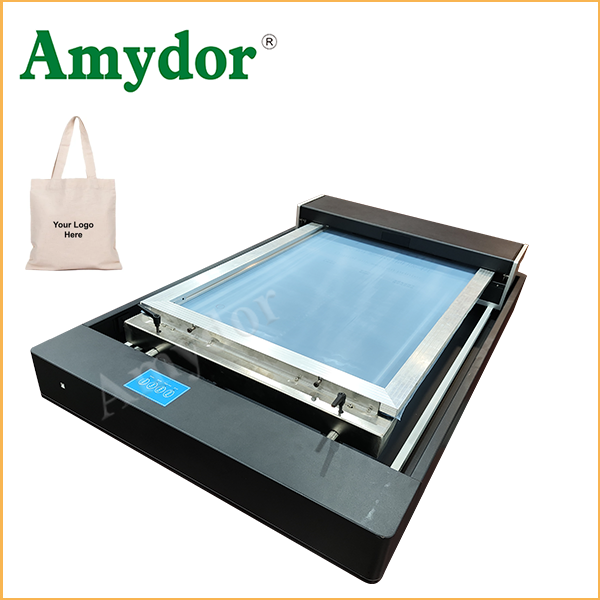
Traditional plate-making relies on cumbersome processes such as film exposure and chemical development, often facing pain points such as long cycles, high waste, and significant environmental pressure. This digital plate-making machine, with “digital direct printing” at its core, completely restructures the plate-making process, improving work efficiency.
- Fully Digital Direct Printing, Extremely Simplified Process: Utilizing digital direct printing technology, it completely eliminates the seven steps of traditional plate-making, including “design output – film production – exposure – development – fixing,” simplifying it to a three-step process: “file import – parameter setting – plate output.” It supports direct import of design files in all formats, such as AI and CDR, without format conversion, and is compatible with mainstream operating systems such as Windows.
- High-Precision Imaging, Stable Quality: Equipped with an adjustable resolution imaging system from 300-600 dpi, high-end models support up to 600 dpi ultra-high-definition output for precise imaging.
- Flexible Adaptability: The digital screen plate printing machine features a compact architecture, allowing for desktop placement without the need for separate factory space planning.
Core Advantages of Digital Screen Plate Printing Machine
- Doubled Efficiency, Drastically Reduced Cycle: Significantly shortens the plate-making cycle, eliminating the complexities of traditional plate-making processes.
- Controllable Costs, Extremely Low Waste: Saves on consumable costs such as film, photosensitive emulsion, and developer; no chemical waste disposal costs, eliminating environmental costs.
- Easy Operation: The machine comes with operation videos; operators can work independently after one hour of training, requiring no professional plate-making technicians. Operation is simple.
- Green and Compliant: No chemical reagents are used throughout the process, resulting in no wastewater or odor emissions, making it a green plate-making solution.
This digital screen plate printing machine’s core competitiveness lies in “high efficiency, precision, environmental friendliness, and low cost,” completely solving the pain points of traditional plate-making processes, such as cumbersome procedures, high waste, and significant environmental pressure. It particularly aligns with the current trend of flexible production in industries like apparel and cultural and creative industries, emphasizing “small-batch, fast-response,” making it the preferred equipment for the digital transformation of small and medium-sized enterprises and studios.
Parameters
| System requirements | Windows system |
| Design software | CoreIDRAW, Ilnstrator and other design software |
| Maximum print width | 300 mm |
| Frame width | 320 mm[ minimum]* 560 mm[ maximum] |
| Frame length | 200 mm[ minimum]* 820 mm[ maximum] |
| Print resolution | 300 dpi* 600 dpi |
| Maximum print image | Width 300 mm* Length 800 mm |
| Pore density | 0.0847 mm* 0.0423 mm |
| Frame thickness | 25 mm- 30 mm |
| Print speed | Maximum 10 mm/ sec |
| Connection method | High-speed USB2.0 |
| Machine voltage | AC, 110 V-240 V, 50/ 60 Hz, customizable |
| Machine power | 150 W |
| Print head life | 150,000 meters, print frame is 30 cm, can print 500,000 |
| Machine dimensions | 1160 mm* 770 mm* 220 mm |
| Approximate weight | 50 KG |
 English
 Arabic
 Dutch
Dutch French
 German
 Italian
 Portuguese
 Russian
 Spanish
 Swahili
 Turkish